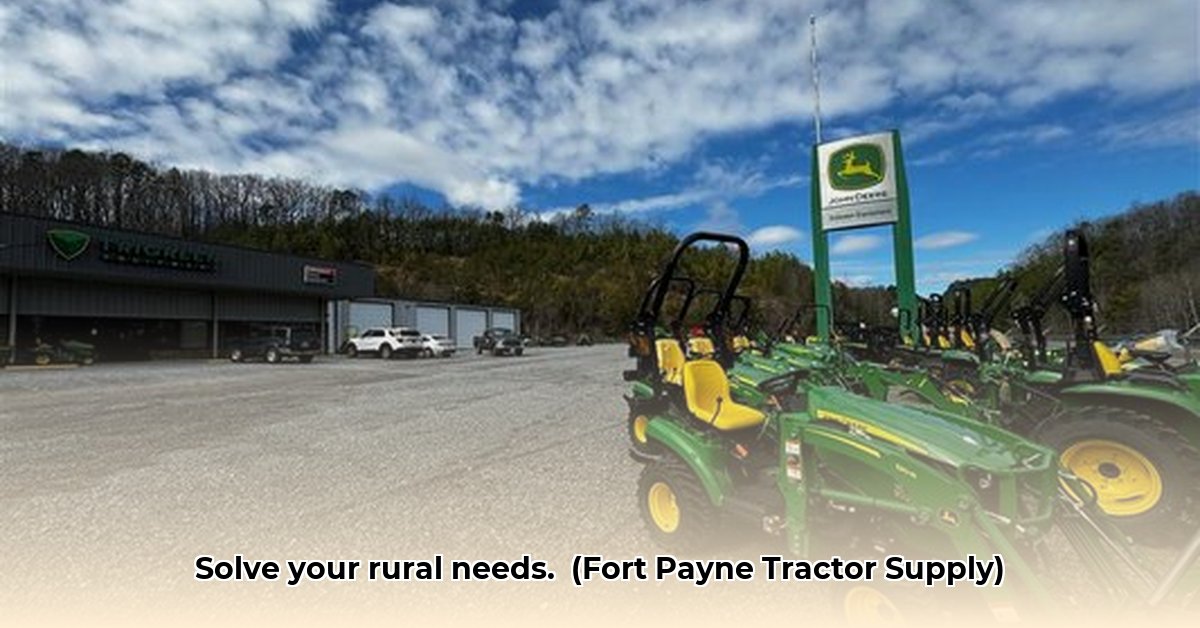
Fort Payne Tractor Supply (FTS) isn't just a retail store; it's a vital community hub serving farmers, gardeners, pet owners, and more. Its accessible location makes it a convenient resource, but understanding its competitive landscape and growth strategies is crucial for its continued success. This analysis explores FTS's market position, growth opportunities, potential risks, and its role within the broader Fort Payne community. For example, see similar strategies at a sister store.
Navigating the Local Marketplace: Fort Payne Tractor Supply's Position
FTS's success is rooted in its strategic location and the diverse needs of the Fort Payne community. However, a comprehensive competitive analysis is needed to fully understand its market share. This requires examining local and regional competitors (both brick-and-mortar and online), analyzing product offerings, and studying customer demographics and purchasing behaviors. For example, data on the percentage of sales derived from farmers versus pet owners can guide targeted marketing and inventory management strategies. Key factors impacting FTS's performance include pricing competitiveness, customer service quality, and the overall in-store experience. Does FTS offer competitive pricing compared to rivals? Are its employees knowledgeable and helpful? Is the store clean, well-organized, and easy to navigate for diverse customer needs?
Strategies for Growth: Short-Term and Long-Term Vision
FTS has significant growth opportunities. Short-term strategies should focus on enhancing its digital presence. A user-friendly website with online ordering and local delivery options would broaden its reach and cater to customers who prefer online shopping. Implementing a customer loyalty program—offering discounts, early access to sales, or exclusive offers—would boost customer retention and brand loyalty. Regular customer surveys will provide valuable insights into customer preferences and unmet needs. Training employees to become experts on sustainable agriculture products would attract environmentally conscious shoppers and position FTS as a leader in this expanding market.
Long-term growth strategies include expanding product and service offerings. The inclusion of sustainable and organic agricultural products directly addresses the growing demand for eco-friendly options. Collaborations with local farmers could create mutually beneficial partnerships, leading to joint workshops or promotional events. Rigorous sales data analysis is critical for effective inventory management. Data-driven decision-making in marketing and operations optimizes resource allocation, leading to increased efficiency and profitability.
Challenges and Risks: Navigating the Uncertainties
FTS faces several key challenges. Competition from established retailers and new entrants is a constant concern. Economic downturns directly impact consumer spending, potentially reducing sales. Supply chain disruptions (delays, shortages, and increased costs) significantly affect operations. Finally, adapting to the ever-changing consumer preferences, including the increasing demand for sustainable products, is vital for long-term success.
How can FTS effectively address these challenges? A proactive and multi-faceted approach is needed.
Mitigating Risks: A Strategic Approach
| Risk Category | Mitigation Strategy |
|---|---|
| Competition | Implement targeted marketing campaigns focused on unique product offerings and superior customer service. Analyze competitor pricing strategies and adjust accordingly. |
| Economic Downturn | Diversify product offerings to include price-sensitive and essential items. Implement flexible pricing strategies and explore cost-saving measures. |
| Supply Chain Disruptions | Diversify suppliers and establish strong relationships with reliable partners. Explore alternative sourcing options for key products. |
| Changing Consumer Preferences | Proactively monitor industry trends and adapt product lines to reflect consumer demands. Invest in research and development and offer educational resources on sustainable practices. |
Tapping into the Sustainable Agriculture Market
The increasing demand for sustainable agriculture presents a significant opportunity for FTS. Stocking organic seeds, fertilizers, and pest control products; promoting water conservation tools and techniques; and organizing educational workshops or partnering with local sustainability organizations will attract environmentally conscious consumers. This strategy aligns with national trends toward sustainable living and reflects Tractor Supply Company’s broader commitment to sustainability 1.
Fort Payne Tractor Supply: A Community Resource
FTS plays a crucial role within the Fort Payne community. It’s more than a retail location; it acts as a resource center for local farmers, gardeners, and pet owners. By consistently focusing on customer needs, adapting to changing market conditions, embracing data-driven decision-making, and developing innovative strategies, FTS can continue to strengthen its position as a vital part of the community.
Key Takeaways:
- FTS's success hinges on understanding its competitive landscape and adapting to changing consumer needs.
- A strong online presence and customer loyalty program are crucial for short-term growth.
- Long-term success requires expanding product offerings, particularly in the sustainable agriculture sector, and mitigating supply chain risks.